How Norweco Singulair Green Enhances Septic System Performance
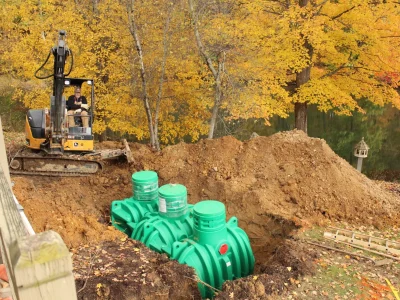

When people talk about septic performance, they often reduce the conversation to one question: does it drain or not? In the field, that is far too simplistic. A septic system can appear to function for years while treatment quality slips, solids migrate, odors develop, and the drainfield starts carrying a load it was never meant to handle. By the time a homeowner notices wet soil, sewage smell, or chronic backups, the real damage has usually been building for a long while.
That is the context in which the norweco singulair green system matters. It is not just another tank in the ground. It is part of a different approach to onsite wastewater treatment, one that aims to improve the quality of effluent before it reaches the final dispersal area. For properties with difficult soils, tight lot constraints, high groundwater concerns, or stricter regulatory requirements, that distinction can make all the difference.
I have seen conventional septic systems perform beautifully when the site was forgiving and the owner was attentive. I have also seen them struggle on properties where the margin for error was small. Aerobic treatment units, including the Singulair Green line, are often selected because they provide another layer of treatment, and in many cases a more consistent one, than a standard gravity septic setup can offer on its own.
What the Singulair Green concept is really trying to do
At its core, a conventional septic tank relies heavily on settling and anaerobic digestion. Wastewater enters, solids drop out, scum floats, and partially clarified effluent moves on to the soil treatment area. That approach works, but it depends on a healthy balance between tank retention time and soil capacity. If either side of that equation gets stressed, performance drops.
The norweco singulair green system is designed to improve the treatment process by incorporating aerobic digestion and controlled biological activity. In plain language, it introduces more oxygen into the treatment environment so aerobic microorganisms can break down organic matter more aggressively and efficiently than in an oxygen-poor tank. That changes the quality of the effluent leaving the unit.
Cleaner effluent matters for a simple reason. The final dispersal component, whether that is a drainfield, drip dispersal layout, mound, or other approved method, performs better when it receives wastewater with lower suspended solids and lower organic loading. Soil can only do so much. The less abuse it takes, the longer and more reliably it tends to function.
That is why these systems are often used where a standard septic design would either be too risky or would require a larger footprint than the property can support. They are not magic. They do not eliminate the need for maintenance, inspections, or common sense water use. What they can do is create a more stable treatment train, especially on sites where treatment quality has to be tighter.
Why aerobic treatment changes the game
Oxygen is the quiet workhorse in this conversation. In an aerobic unit, air supports bacteria that break down dissolved and suspended waste more quickly than anaerobic conditions typically allow. The practical effect is better reduction of organic material and, often, clearer effluent with less odor potential.
That does not mean every aerobic unit performs the same way in every setting. Real performance depends on design, sizing, installation quality, service intervals, and how the household uses water. A well-installed aerobic treatment unit serving a family of four with fairly consistent water use is a different story from an oversized vacation home that sits empty for weeks and then gets hit with twelve guests over a long weekend.
What I have found over time is that aerobic systems tend to reward steady use and routine oversight. They are engineered systems, not passive vaults. When they are serviced as intended and paired with realistic expectations, they often deliver very strong treatment performance. When owners treat them like a buried black box that never needs attention, problems show up sooner.
The Singulair Green name is associated with compact, integrated treatment aimed at improving wastewater quality before discharge. That is where its value lies. It is not in marketing language or gadget appeal. It is in reducing the burden on downstream components and helping a property meet treatment expectations that a basic tank may not handle as comfortably.
Better effluent quality protects the most expensive part of the system
Homeowners often focus on the visible components, lids, alarms, aerators, maybe a control panel. Installers and service providers tend to think farther downstream. The costly, hard-to-replace part of most septic systems is the soil absorption area. Once a drainfield is compromised, replacement is rarely cheap and never convenient.
A cleaner discharge from a norweco singulair green unit can help reduce the amount of suspended solids and untreated organic matter reaching that area. That matters because excess solids contribute to clogging and biomat overload. Every onsite wastewater professional has seen trenches or beds that were not destroyed by age alone, but by years of poor-quality effluent.
There is a practical analogy I sometimes use with property owners. Think of the dispersal field as a high-end air filter. It can polish what comes through, but it is not designed to catch chunks, grease, and half-treated waste forever. If you send it cleaner water, it works in its proper range. If you make it do the heavy lifting every day, service life tends to shrink.
On marginal sites, this becomes even more important. A sandy, well-drained lot may forgive mistakes for a while. Clay soils, shallow limiting layers, seasonal saturation, and tight setbacks do not forgive much. In those situations, improving pretreatment is not a luxury. It is often the factor that turns a barely workable design into a durable one.
Where the system tends to shine
Not every property needs advanced treatment. A rural home on deep, well-drained soil with plenty of room can do very well with a conventional septic tank and field, assuming proper sizing and maintenance. But there are plenty of situations where enhanced treatment becomes attractive very quickly.
The properties that usually benefit most include those with smaller lots, environmentally sensitive areas, stricter discharge requirements, difficult native soils, or replacement scenarios where the available installation area is limited. In those cases, advanced pretreatment can offer both a regulatory path and a practical one.
I remember a lake-adjacent property where the original system had limped along for years. The owner was convinced the problem was simply age. It was partly age, but the bigger issue was that the site had very little room, and the old system was sending mediocre effluent into a field with almost no reserve capacity. A replacement design using advanced pretreatment was not cheap, but the difference in operating stability over the next several seasons was obvious. Odor complaints stopped. Surface wetness disappeared. Service visits became routine rather than emergency-driven.
That kind of improvement is rarely about one component doing something miraculous. It is about the entire treatment train becoming more balanced.
Performance is not just treatment quality, it is consistency
One of the most overlooked advantages of a well-maintained aerobic unit is consistency. Conventional septic tanks can do a respectable job, but they are vulnerable to surge flows, poor maintenance, and solids carryover if pumping intervals are ignored. The more variable the incoming waste stream, the more important process control becomes.
The Singulair Green approach is meant to create a more active, managed biological environment. That tends to smooth out some of the variability in household wastewater, particularly in homes where occupancy is reasonably predictable. Kitchens, laundry use, cleaning products, and bathroom habits all affect septic biology. No residential system sees perfect conditions all the time.
What good design does is create resilience. It gives the system a better chance of continuing to perform when real life gets messy. That is one reason these units are often chosen not just because of local code, but because a designer wants more confidence in the quality of the final effluent.
That said, consistency has limits. If a household is dumping grease, bleach in excess, paint residues, wipes labeled flushable, or loads of water from leaking fixtures, no treatment unit is going to thank them for it. Better technology raises the floor, but it does not excuse abuse.
The maintenance trade-off is real
It is worth being direct here. The norweco singulair green system can enhance septic performance, but it also introduces mechanical and service requirements that a basic septic tank does not have to the same degree. Aerators, electrical components, alarms, and service intervals are part of the package. Anyone considering one should see that as a feature of the treatment process, not an inconvenience tacked on at the end.
The homeowners who are happiest with aerobic systems are usually the ones who understand that maintenance is part of ownership. They do not resent a service call any more than they resent furnace maintenance or well equipment checks. They recognize that better treatment comes from active operation.
A neglected aerobic unit can still fail, and when it does, the failure can be less obvious at first than a dramatic backup. Treatment quality may decline before the owner notices anything at the sink or toilet. That is why regular inspection matters. A service provider can often spot declining performance, sludge accumulation, or component wear before the issue turns into a field problem.
For buyers weighing the pros and cons, the trade-off looks like this:
- Better treatment quality often means more protection for the dispersal area.
- More advanced performance usually requires electricity and scheduled service.
- Challenging sites may benefit far more than easy sites.
- Long-term value depends heavily on installation quality and owner follow-through.
- The cheapest bid is rarely the best indicator of lifetime system cost.
That list captures the broad picture, but the real decision should still be site-specific. Soil conditions, local regulations, household size, and available service support matter more than any brochure claim.
How the system can support environmental goals
There is also a broader performance question beyond household convenience. Septic systems are not only private infrastructure. They are environmental infrastructure. When treatment is poor, nutrients, organic matter, and pathogens can place stress on surrounding soils, groundwater, ditches, streams, and lakes, depending on local conditions.
Advanced pretreatment can help reduce that risk by improving the wastewater before soil polishing takes over. I am careful here because exact treatment levels depend on the full system design, operating condition, and local approval standards. Still, the general principle is sound: higher-quality pretreatment usually gives the receiving environment a better starting point.
This matters especially in waterfront communities and semi-rural subdivisions where many systems operate close together. A single underperforming septic system can be a nuisance. A cluster of underperforming systems can become a public health and water quality issue. In these areas, systems like the norweco singulair green unit are often part of a larger strategy to keep onsite wastewater treatment viable without moving to full municipal sewer.
That is not theoretical. In many regions, the economics of extending sewer lines to low-density areas simply do not work. Better onsite treatment is the practical middle ground.
Installation quality often matters more than brand loyalty
People naturally ask whether one manufacturer is better than another. Brand matters, but not as much as many assume. In my experience, a well-designed, correctly installed, properly maintained treatment unit from a reputable manufacturer usually outperforms a poorly installed version of a premium product.
With systems like Singulair Green, the details count. Tank elevation, watertight connections, airflow performance, electrical setup, dosing configuration where applicable, and final dispersal design all need to line up. A sophisticated pretreatment unit feeding a badly laid-out field is still part of a weak system.
I have seen owners blame the treatment unit when the real issue was hydraulic overload from roof drains, sump discharge, or a leaking toilet adding hundreds of gallons per day. I have also seen installations where easy service access was ignored, turning routine maintenance into a cumbersome, expensive process. Those are not product problems. They are design and installation decisions showing up later as ownership headaches.
If there is one practical lesson here, it is this: buy the system and the support structure around it. A solid local installer and service provider are at least as important as the model you choose.
Signs a property might benefit from this type of system
For owners evaluating whether advanced treatment makes sense, a few site conditions tend to point in that direction. These are not ironclad rules, but they are common triggers for a closer look.
- The lot has limited usable area for a conventional drainfield.
- Native soil conditions are restrictive or seasonally wet.
- The property sits near a water body or in a sensitive environmental zone.
- Local code requires higher treatment performance than a basic tank can provide.
- A replacement system must fit into a constrained footprint.
If more than one of those applies, it is usually worth discussing advanced treatment with a licensed designer or installer. Even when a conventional option remains legal, the performance margin may be narrower than a homeowner realizes.
Day-to-day habits still matter
No treatment unit can fully compensate for bad septic habits. The strongest systems are the ones that combine sound equipment with disciplined household use. That means spreading out laundry, fixing leaks promptly, avoiding harmful disposals, and pumping accumulated solids on the schedule recommended for the actual loading conditions.
One issue that surprises many owners is hydraulic overloading from clean water, not sewage. A running toilet, high-use whirlpool tub, or steady leak at a softener connection can put stress on the system even if the water itself is not especially dirty. Septic treatment depends on retention time. Too much water too quickly reduces the system's ability to settle and process waste properly.
Chemical abuse is another recurring problem. Moderate household cleaner use is usually manageable in a healthy system, but repeated heavy doses of disinfectants or improper disposal of solvents and paints can disrupt biological treatment. Aerobic units are robust, but they still depend on living microbial populations.
The best-performing systems are rarely attached to perfect households. They are attached to households that understand the basics and respond quickly when something seems off.
What owners should ask before choosing one
A purchase decision around advanced onsite treatment should never stop at, "Will this fit on my lot?" Better questions tend to produce better outcomes. Ask how the unit will be serviced norweco singulair green excavatingnj.com locally. Ask what the normal maintenance cycle looks like. Ask how alarms present themselves and what they actually mean. Ask whether electrical use is modest or significant relative to other home systems. Ask how the final dispersal component is being protected by the design.
Just as important, ask what happens if occupancy changes. A home that shifts from two permanent residents to short-term rental use can create very different loading patterns. Some systems handle variability better than others, but all of them benefit from honest design assumptions.
If a contractor cannot explain these issues in plain language, that is a warning sign. Septic work is technical, but it should not be mysterious.
Why the Singulair Green name keeps coming up in serious septic conversations
Products earn their reputation over time through service records, installer familiarity, regulator acceptance, and owner experience. The norweco singulair green system comes up regularly because it sits in a category that solves real problems for real sites. It offers a route to improved treatment where a basic gravity setup may be limited by space, soil, or performance expectations.
That does not mean it is automatically the right answer for every project. Sometimes a well-designed conventional system is simpler and entirely appropriate. Sometimes another advanced unit better matches local service support. The point is not to treat any one product as universal. The point is to understand what problem it is built to solve.
Its main contribution to septic system performance is straightforward: it improves pretreatment, which can improve downstream reliability, extend the useful life of dispersal components, reduce nuisance conditions, and support installations in places where treatment quality cannot be left to chance.
For homeowners, that may translate into fewer headaches and more confidence. For installers and designers, it can mean a stronger technical solution on a tough lot. For communities trying to balance development with groundwater and surface water protection, it can be part of keeping onsite wastewater treatment both feasible and responsible.
A septic system works best when every part of it carries only the load it was meant to carry. That is the real value of enhanced treatment. It does not ask the soil to rescue poor effluent. It sends the soil something it has a far better chance of handling well, year after year.
Excavating New Jersey LLC
406 County Rd 565, Wantage, NJ 07461, United States
+1 973-791-4284
FAQ About norweco singulair green
How much does a NORWECO septic system cost?
The installed cost depends on the selected unit, engineering, site access, excavation, electrical work, disposal-field design and required approvals. A tank-only price is not a complete installation quote. Ask Excavating New Jersey LLC for a site-specific, itemized estimate that also explains ongoing service costs.
How does a Norweco septic system work?
The Singulair Green uses pretreatment, aeration, clarification and filtration to treat domestic wastewater. In the aeration chamber, oxygen supports bacteria that break down organic material. The Bio-Kinetic unit provides further filtration and flow equalization. Final effluent disposal must follow the property's approved design and applicable requirements.
What is the average lifespan of a septic system?
There is no guaranteed lifespan for every system. Design, installation, soil conditions, wastewater loading and regular maintenance all matter, and mechanical parts may need replacement before the tank. For a Singulair Green system, follow the manufacturer's service schedule and have a qualified provider assess its condition and pumping needs.
Ends · TITUSMCOI922