Comparing Norweco Singulair Green to Traditional Septic Systems
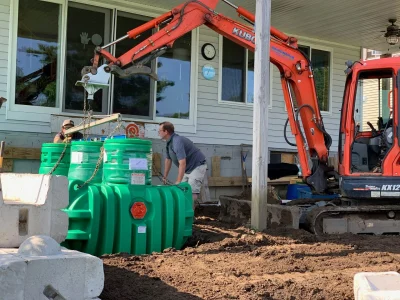


For property owners trying to choose an onsite wastewater system, the comparison between a conventional septic setup and an advanced treatment unit often starts with a simple question: which one actually fits the property, the budget, and the long-term maintenance reality? That question gets more complicated when a site has poor soils, a high water table, a small lot, or local regulations that demand cleaner effluent than a basic tank-and-drainfield can reliably provide.
That is where systems like the norweco singulair green enter the conversation. It is not just another septic tank. It is an aerobic treatment system designed to produce a higher level of wastewater treatment before effluent moves to final dispersal. On paper, that sounds straightforward. In practice, the choice between a Singulair Green unit and a traditional septic system affects installation methods, operating costs, service expectations, permitting, norweco singulair green and even how forgiving the system is when household habits are less than ideal.
I have seen property owners assume that all septic systems work more or less the same way. They do not. A conventional septic system depends heavily on the soil to finish the treatment process. An aerobic treatment unit does more treatment inside the tankage itself. That single distinction changes almost everything else.
The basic difference comes down to treatment intensity
A traditional septic system is simple in concept. Wastewater leaves the house, enters a septic tank, and separates into solids, scum, and liquid effluent. The tank handles primary settling. From there, partially treated wastewater flows to a drainfield, where soil microbes complete much of the actual purification. When the site conditions are favorable, this can work very well for many years.
The norweco singulair green follows a different treatment path. It uses aerobic processes, meaning oxygen is introduced to support bacteria that break down waste more aggressively than the anaerobic environment in a standard septic tank. In broad terms, that means cleaner effluent leaving the treatment unit. Cleaner effluent can be a major advantage where soil conditions are marginal or environmental protection standards are tighter.
This is the first practical point homeowners should understand: when comparing these systems, you are not just comparing tanks. You are comparing treatment philosophies. One system relies primarily on passive settling plus soil absorption. The other performs a much larger share of treatment mechanically and biologically before the wastewater ever reaches the dispersal area.
Why site conditions often decide the winner
In the field, the right choice is often made by the land itself. A traditional septic system tends to be most attractive on larger lots with suitable native soils, enough separation from groundwater, and enough room for both the initial system and a replacement area if the local code requires one.
When those conditions are absent, a conventional design may become difficult, expensive, or impossible to permit. Tight clay, shallow bedrock, seasonally high groundwater, waterfront setbacks, and restricted lot sizes can all push a project toward advanced treatment. In those cases, a system like the norweco singulair green may not be a luxury upgrade. It may be the most realistic path to approval.
I have watched projects change direction after soil testing revealed what the owner did not want to hear. A lot that seemed ideal from the road turned out to have poor percolation and limited vertical separation. Suddenly the low-maintenance simplicity of a standard septic system was off the table. The decision became less about preference and more about compliance.
That is not a knock against conventional systems. On good sites, they remain practical and cost-effective. But they are more site-dependent than many buyers realize.
How treatment performance differs in real use
A traditional septic system can provide solid service for decades when it is properly designed, lightly stressed, and installed in good soil. The issue is that the wastewater leaving the septic tank is still only partially treated. The drainfield and surrounding soil are doing substantial work. If the site is overloaded, if solids escape because the tank is not pumped on schedule, or if the field is compromised by saturation, treatment quality drops.
An aerobic unit like the norweco singulair green is built to reduce pollutants further inside the system itself. That generally means lower biochemical oxygen demand, lower suspended solids, and a better effluent quality heading to the dispersal component. The practical result is not just cleaner water. It can also reduce stress on the downstream field or other disposal method, assuming the system is maintained correctly.
That last phrase matters. Advanced treatment units can perform at a high level, but they are not passive. If a homeowner ignores service needs, turns off power, or neglects alarms, performance can suffer. A conventional septic system is less treatment-intensive, but it also has fewer moving parts to fail.
So the honest comparison is this: traditional systems are simpler but less aggressive in pretreatment. Aerobic systems treat better but ask more from the owner and service provider.
Installation cost is only part of the story
Most buyers focus first on upfront cost, and that is understandable. In many markets, a standard septic system with a tank and gravity drainfield costs less to install than an aerobic treatment unit. Exact numbers vary widely by region, labor rates, excavation demands, and local code requirements, but conventional systems are usually the lower-cost option when the site supports a straightforward installation.
The wrinkle is that site constraints can erase that advantage quickly. If a conventional system requires imported fill, an engineered mound, extensive pressure distribution, significant excavation, or a large footprint that affects the house plan, the price gap can narrow. In some cases, the advanced treatment system paired with a smaller or more flexible dispersal approach becomes competitive.
The norweco singulair green also carries equipment-related costs that a conventional tank does not. There is more internal complexity, there may be control components, and installation often involves electrical work. Those are real expenses, and homeowners should budget for them honestly.
Still, installation cost by itself is a poor decision tool. I have seen owners choose the cheapest initial design only to face expensive drainfield rehabilitation later because the system was squeezed onto a marginal site. I have also seen advanced systems rejected as too expensive, even when they would have preserved more usable yard space and reduced permitting friction. The smarter conversation looks at both first cost and long-term fit.
Operating costs separate these systems more clearly
This is where the ownership experience starts to diverge.
A traditional septic system typically has low routine operating costs. There is no aerator running every day, no motor drawing power, and often no electronic controls. The homeowner mainly pays for scheduled pumping, inspections, and occasional repairs. If the system is healthy and water use is reasonable, annual ownership cost can be modest.
The norweco singulair green, because it is an aerobic treatment system, usually involves ongoing electricity use and regular professional service. The actual utility cost depends on local rates and system operation, but it is not zero. More importantly, the maintenance expectation is higher. Many jurisdictions require service contracts or documented inspections for advanced treatment units, and that makes sense because performance depends on proper operation.
For some owners, that is completely acceptable. They would rather pay for predictable maintenance than gamble on a conventional field in questionable soil. For others, especially owners of seasonal cabins or remote properties, the added oversight feels burdensome.
There is no universal right answer here. There is only the question of what kind of owner you are. If you want the most passive system possible and your site supports it, traditional septic remains appealing. If you can accept recurring service in exchange for higher treatment performance and potentially more siting flexibility, the Singulair Green becomes more attractive.
Maintenance is where homeowner discipline matters most
Both systems need attention. One of the most persistent myths in wastewater management is that septic means “install it and forget it.” That approach shortens the life of any system.
A conventional septic setup still needs regular tank pumping at intervals that depend on tank size, household size, and usage patterns. For many homes, that means roughly every three to five years, though some need it sooner and some later. Filters, if present, need cleaning. The field area must be protected from compaction, vehicle traffic, and root intrusion. Excessive water use can overload the system even if everything was sized correctly.
The norweco singulair green asks for more active stewardship. Components must be functioning, aeration must continue, and alarms or controls must not be ignored. If disinfection is part of the approved design in a given jurisdiction, that adds another maintenance layer. Professional inspections are not busywork. They are part of keeping the treatment quality at the level the permit assumed.
Here is the practical distinction I often explain to owners. A traditional septic system punishes neglect slowly, then expensively. An aerobic system can punish neglect sooner, because its treatment process depends on equipment and biological balance. Neither system is maintenance-free. One is just less obviously mechanical.
Reliability depends on what you mean by reliable
Some people hear “advanced treatment” and assume better technology always means greater dependability. Others hear “mechanical components” and assume the opposite. Both views miss the nuance.
A conventional septic system is reliable in the sense that it has fewer things to break. No blower, fewer controls, often gravity flow. When it is placed in suitable conditions and treated properly, it can be impressively durable. That kind of simplicity has real value.
But conventional systems are not universally reliable across all sites. Put one in marginal soils or a poorly drained area, and its apparent simplicity can turn into chronic wet spots, backups, odors, or field failure. Reliability is not just about the number of components. It is about how well the system matches the site.
The norweco singulair green is reliable when it is serviced and installed correctly, but it is a managed system. It depends on power and functioning equipment. A prolonged outage, deferred maintenance, or an ignored alarm changes the risk profile. In exchange, it can deliver more consistent treatment where a standard system would struggle.
That is the trade-off in one sentence: conventional systems are mechanically simpler, advanced systems are often environmentally stronger under difficult site conditions.
What happens when household use is less than ideal
No wastewater system loves abuse. Flush wipes, grease, solvents, paint, excessive bleach, and chronic hydraulic surges are bad news no matter what is buried outside. But the two system types can react differently.
Traditional septic systems tend to be vulnerable to solids carryover and hydraulic overload. If too much water enters too quickly, the field gets stressed. If the tank is not pumped, solids can migrate and damage the dispersal area. Once a drainfield fails badly, repairs can be invasive and expensive.
Aerobic treatment units can be sensitive to sudden chemical shocks, power interruptions, and lack of maintenance. The biological process wants stability. If the owner treats the system like a trash can or disables components because of noise or cost, treatment quality can drop faster than many expect.
For large families, rental properties, or homes with highly variable occupancy, design and management matter a lot. I have seen vacation homes idle for weeks, then host a full house for a holiday weekend. Those usage swings can challenge any onsite system. In such cases, the right answer often depends less on brand or category and more on whether the design professional accounted for real occupancy patterns rather than idealized ones.
Environmental considerations are not just marketing language
For some properties, cleaner effluent is not an abstract benefit. It is the difference between acceptable environmental impact and unacceptable risk.
Homes near lakes, streams, estuaries, or sensitive groundwater areas often face stricter scrutiny because nutrient loading and pathogen transport matter. In those contexts, advanced treatment can help protect nearby water resources by improving effluent quality before dispersal. That does not mean every aerobic unit is automatically superior in every metric under every condition, but it does mean higher treatment levels can be meaningful in the right setting.
The norweco singulair green is often considered when projects need a treatment level beyond that of a basic septic tank. That can support environmental goals and regulatory compliance at the same time. For developers or homeowners building in sensitive areas, that matters.
Conventional systems still have an important environmental role. On an appropriate site with good soil treatment and careful maintenance, a standard septic system can function responsibly for many years. The mistake is assuming all sites provide the same environmental margin for error. They do not.
Permitting and regulation can shape the decision more than preference
Many homeowners approach system selection as if they are shopping from a menu. In reality, local code, health department requirements, and engineered design constraints may narrow the options quickly.
Some jurisdictions are comfortable with conventional systems whenever soils and setbacks qualify. Others impose advanced treatment requirements in nitrogen-sensitive zones, near impaired waters, or on lots with specific limitations. Service contracts, inspection frequencies, and reporting rules also vary. A system that seems ideal in one county may not be approved in the next.
Before getting attached to any design, owners should understand a few things:
- What treatment level local code requires for the specific parcel.
- Whether the site can support a conventional drainfield within setback and reserve area rules.
- What electrical, service, and inspection obligations come with an advanced unit.
- How replacement or repair options look if the first system reaches the end of its useful life.
- Whether seasonal use, rentals, or future additions change the design basis.
That short checklist saves a lot of frustration. I have seen people spend weeks comparing equipment features when the permitting authority had effectively already decided the category of system that would be allowed.
Longevity depends on design quality more than labels
A fair question is whether a traditional system lasts longer than a Singulair Green. There is no honest one-size-fits-all answer. System life is influenced by design accuracy, installation quality, water use habits, pumping intervals, service discipline, soil conditions, and how gently the field area is treated.
A well-designed conventional system on excellent soil can provide decades of service. A neglected one can fail much sooner. An advanced treatment unit can also serve for many years, but mechanical components may need replacement on a different timetable than the tank structure itself. That is normal. Blowers, controls, and related parts are consumable in a way that a passive concrete tank is not.
What matters is that owners budget realistically. If someone buys an aerobic treatment unit expecting the same maintenance profile as a passive gravity septic tank, disappointment follows. If someone buys a conventional system for a difficult site expecting it to behave like one installed in deep, well-drained loam, disappointment follows there too.
Which system tends to suit which property
There are broad patterns, even if every parcel is different. Traditional septic systems often make sense for rural homes with adequate land, good native soils, favorable depth to groundwater, and owners who want a straightforward, low-energy setup. They are especially attractive where gravity can do most of the work and local codes are uncomplicated.
The norweco singulair green tends to make more sense where better pretreatment is needed, where lot constraints make conventional approaches difficult, or where environmental sensitivity raises the treatment bar. It also fits owners who are comfortable with service contracts and understand that better performance often comes with more operational oversight.
This is one of those decisions where the best answer is often the least glamorous one. Some sites truly do not need advanced treatment. Others should not force a conventional system just to save money upfront. Good wastewater planning is rarely about chasing the most sophisticated option. It is about choosing the option that solves the actual problem without creating a bigger one later.
The ownership experience feels different day to day
Most homeowners do not think about wastewater treatment until something goes wrong, but the day-to-day feel of ownership still differs between these systems.
With a traditional septic system, if it is working properly, life is quiet. There may be long stretches with no visible signs of the system at all. Pumping day comes every few years, and otherwise it stays out of mind. That is a genuine quality-of-life advantage for many people.
With a system like the norweco singulair green, the relationship is a bit more active. There may be service visits, operating checks, and occasional reminders that the system is a piece of treatment equipment, not just buried infrastructure. Some owners appreciate that oversight because it gives them confidence. Others find it inconvenient.
Neither reaction is wrong. It simply comes down to whether the owner values passivity or managed performance more, and whether the site allows that preference to carry any weight.
The better question is not “which is better,” but “better for what?”
Comparing the norweco singulair green to a traditional septic system only makes sense when the goals are clear. If the goal is the simplest, lowest-operating-cost system on a strong site, a conventional septic system often wins. If the goal is higher treatment performance, better compatibility with difficult site conditions, or compliance in a sensitive area, the advanced system may be the stronger choice.
The worst decisions happen when owners compare only one variable. Lowest purchase price misses long-term operating context. Highest treatment level ignores maintenance appetite. Mechanical simplicity overlooks site limitations. Regulatory approval can override personal preference altogether.
A good design professional will look at the lot, the soils, the water table, the occupancy pattern, the code requirements, and the owner’s tolerance for ongoing service. That full picture matters more than sales language or brand familiarity. Wastewater systems are not interchangeable appliances. They are site-specific treatment solutions, and the land gets a vote.
For homeowners evaluating these options, the most sensible path is to match the system to the property’s limitations and to the owner’s real habits, not ideal habits. When that match is honest, either a traditional septic system or a norweco singulair green can be the right answer. When that match is forced, both can become expensive lessons buried in the yard.
Excavating New Jersey LLC
406 County Rd 565, Wantage, NJ 07461, United States
+1 973-791-4284
FAQ About norweco singulair green
How much does a NORWECO septic system cost?
The installed cost depends on the selected unit, engineering, site access, excavation, electrical work, disposal-field design and required approvals. A tank-only price is not a complete installation quote. Ask Excavating New Jersey LLC for a site-specific, itemized estimate that also explains ongoing service costs.
How does a Norweco septic system work?
The Singulair Green uses pretreatment, aeration, clarification and filtration to treat domestic wastewater. In the aeration chamber, oxygen supports bacteria that break down organic material. The Bio-Kinetic unit provides further filtration and flow equalization. Final effluent disposal must follow the property's approved design and applicable requirements.
What is the average lifespan of a septic system?
There is no guaranteed lifespan for every system. Design, installation, soil conditions, wastewater loading and regular maintenance all matter, and mechanical parts may need replacement before the tank. For a Singulair Green system, follow the manufacturer's service schedule and have a qualified provider assess its condition and pumping needs.
Ends · TITUSMCOI922